

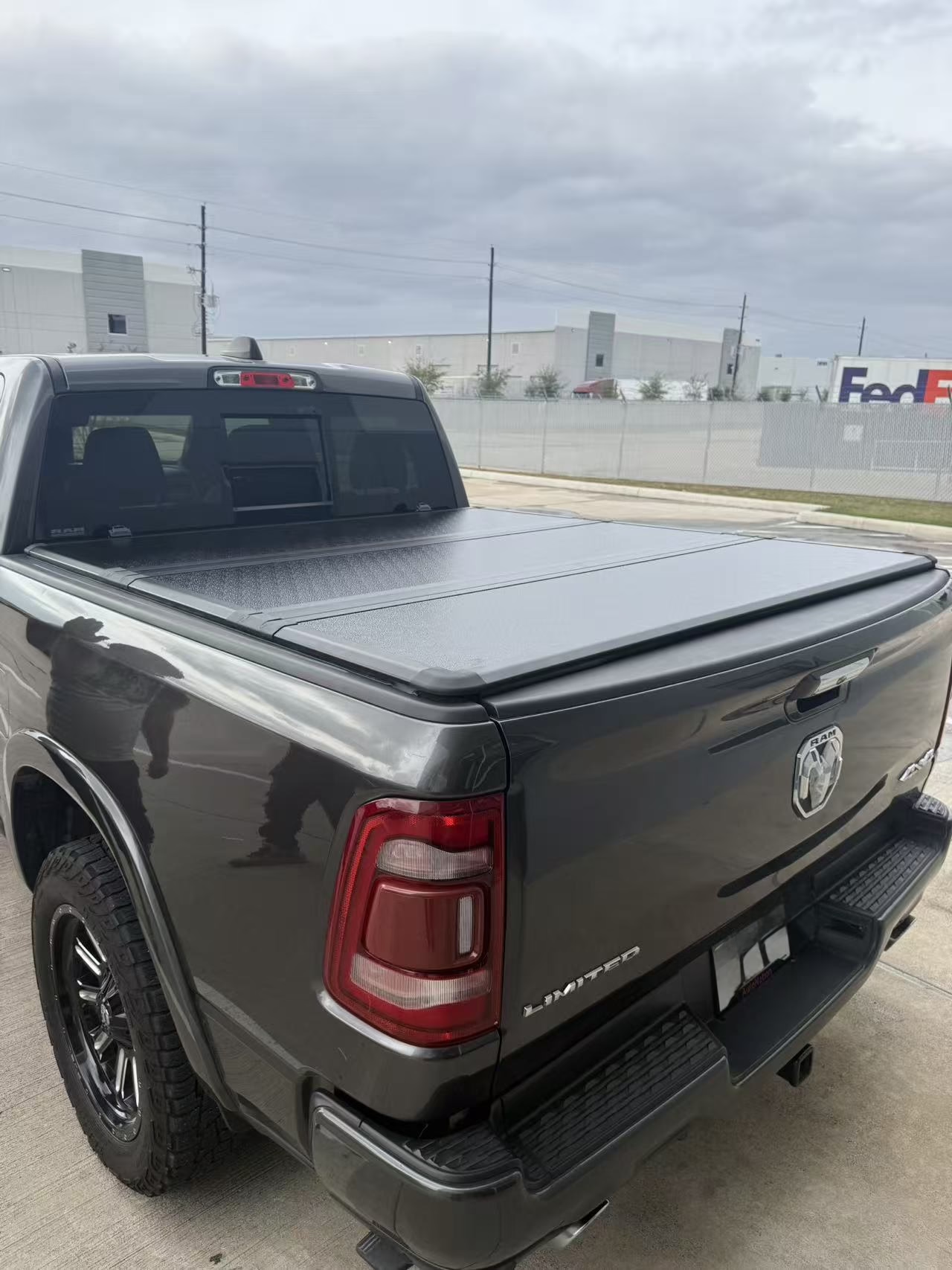
After your tonneau cover is installed, check that you understand how it opens, closes, latches, and secures for travel. Review panel alignment, tailgate operation, accessory clearance, and any follow-up inspections required by the manufacturer.
The handover is a good time to ask questions while the installer can demonstrate the exact model. Whether you chose professional installation or fitted the cover yourself, complete the manufacturer’s installation checks before driving.
Table of Contents
- Confirm the Model and Keep the Instructions
- Review Panel Alignment and Sealing Surfaces
- Practice Closing the Cover and Tailgate
- Learn the Approved Open Positions
- Check Accessories and Cargo Clearance
- Know What to Inspect After Initial Use
- Questions to Ask Before Leaving
- Frequently Asked Questions
Confirm the Model and Keep the Instructions
Keep a record of the cover’s brand, model, and part number, along with the installation receipt and operating instructions. If there are separate instructions for your truck or mounting hardware, keep those too.
Ask where to find the care guide, replacement-part information, and applicable warranty terms. Product coverage and installation workmanship may have different terms or contact points, so clarify whom to contact for each type of issue.
If you installed the cover yourself, review the final inspection steps and any vehicle-specific supplements. Our guide to professional tonneau cover installation vs. DIY explains the considerations behind each approach.
Review Panel Alignment and Sealing Surfaces
With the cover closed, look along both sides and across the front and rear edges. Ask the installer to explain how the panels, rails, and seals should sit on your particular truck.
Look for anything that needs clarification, such as a seal caught beneath a panel, a visibly displaced edge, or one section sitting differently from the others. Not every design sits flush with the bed rails, so compare the fit with the model’s instructions rather than another truck’s appearance.
Ask how to identify the clamps or mounting points you need to inspect later. Follow the specified fastening procedure; avoid tightening bolts by feel or changing clamp positions to correct an apparent gap.
Practice Closing the Cover and Tailgate
Have the installer demonstrate a complete opening and closing cycle, then operate the cover yourself. Learn where the releases are, how the latches engage, and how to confirm that closure is complete.
Check the required order for closing the cover and tailgate. That sequence can depend on the model, so do not assume that either can be closed first. The tailgate should operate as intended without forcing it against the cover.
Ask how the locking arrangement works. Some covers depend on a locked tailgate to restrict access to their releases; others use a different system. Understand the specific setup without treating the bed as theft-proof storage.
If a latch does not engage or the panels require unusual force to close, resolve the issue before using the truck. Slamming a panel is not a substitute for correct fitment.
Learn the Approved Open Positions
Ask which positions are intended for loading while parked and which are approved for driving. Have the installer demonstrate any required straps, buckles, clips, or support rods on the selected model.
A hard tri-fold cover may leave folded panels over the front of the bed. Do not assume those panels can be raised against the cab, or that every partly open position is suitable for travel.
If full access requires removing the cover, review the removal, handling, storage, and reinstallation procedures before you need them. Our guide to hard tri-fold tonneau cover bed access explains what to consider when the folded panels still occupy part of the bed.
Keep hands clear of folding joints and follow the instructions for supporting or securing open panels.
Check Accessories and Cargo Clearance
Operate the cover with any existing toolbox, rack, liner, or storage system in place. Confirm that accessory mounts do not interfere with the cover’s hardware and that toolbox lids and folding panels have the clearance they need.
Check your usual cargo too. A storage bin that fitted in the uncovered bed may be too tall beneath the new cover or sit in the path of a latch. Leave the required space around panels and operating components.
Secure cargo independently with suitable restraints. Neither the closed cover nor its folded panels should be used to hold equipment in place.
If your truck has multiple accessories, read our guide to using a tonneau cover with a toolbox or bed rack. Compatibility needs to cover the complete setup, including how each part moves.
Know What to Inspect After Initial Use
Ask whether your model requires a follow-up check after installation and what ongoing inspection schedule to use. Follow that guidance rather than assuming every cover has the same mileage or time interval.
During the prescribed checks, pay attention to changes in panel position, latch operation, and mounting security. If you notice new movement or a securing problem, stop using the affected configuration and contact the installer or manufacturer before driving.
After rain or an approved wash, note any unexpected water entry and where it appears. A tonneau cover does not necessarily create a completely waterproof compartment, but a new or persistent leak deserves assessment. Avoid adding sealant before the cause is identified.
Keep photos of the installed setup and any issue you notice. Record when the problem began and whether the cover was recently removed or other accessories were changed.
Questions to Ask Before Leaving
- Can you show me how to confirm every required latch is engaged?
- What is the correct closing sequence for the cover and tailgate?
- Which open positions are approved for driving, and how do I secure them?
- What should I inspect after initial use and during routine maintenance?
- Which cleaning products and wash methods are approved?
- Who should I contact if fitment or operating problems appear?
A clear handover gives you a reference for normal operation and helps you describe any later changes. Keep the instructions accessible to anyone else who uses the truck.
If you are planning a hard tri-fold cover installation in Katy, Texas, contact Prime Truck Covers. Share your truck’s year, make, model, bed length, and accessory details to ask about compatible options, availability, and an installation quote.
Frequently Asked Questions
Should I retighten the clamps immediately after installation?
Follow the model’s inspection and fastening instructions. Do not add extra tightening simply because the cover is new. If mounting security is uncertain, have the installation checked before driving.
Should the tailgate close before or after the tonneau cover?
The sequence depends on the cover. Check the operating instructions and have the installer demonstrate it. Do not force the tailgate or panel closed if they interfere with each other.
Can I drive with the cover partially open after installation?
Only in a position approved for travel by the manufacturer, with all required restraints secured. An opening position used while loading is not automatically approved for driving.
What should I do if a panel will not latch?
Check for an obvious obstruction without forcing the panel. If it still will not engage correctly, contact the installer or manufacturer and resolve the issue before driving with the cover unsecured.