

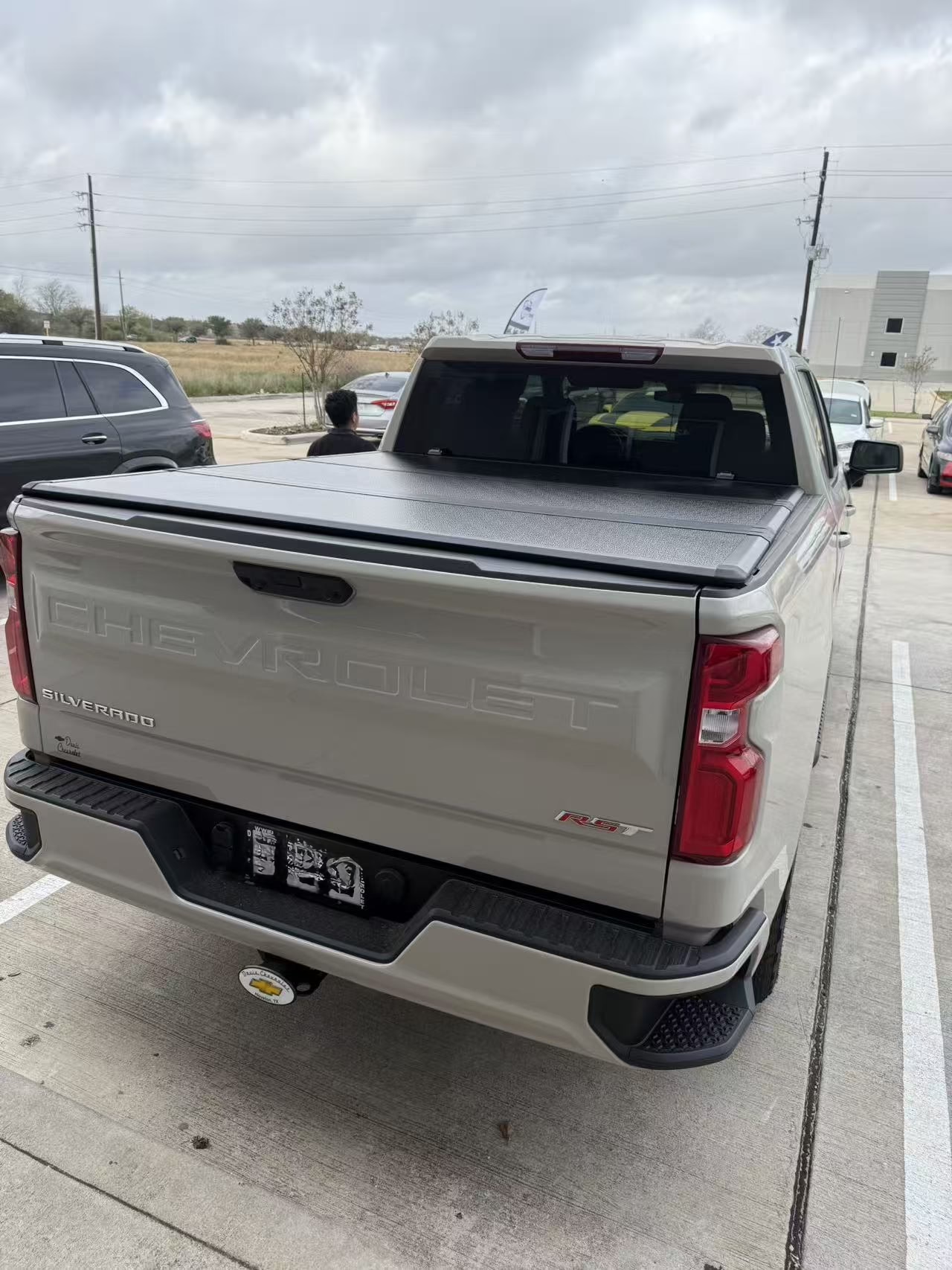
To clean a hard tri-fold tonneau cover, start with the care instructions for its exact model and finish. Mild automotive soap, water, and a clean, soft cloth or sponge are commonly recommended, but waxes, protectants, and lubricants need a separate compatibility check.
Cleaning is also a useful opportunity to inspect the seals, latches, and mounting hardware. A cover that looks clean should still close, latch, and stay secured as its manufacturer intended.
Table of Contents
- Check the Instructions Before Cleaning
- How to Wash the Panels
- Choose Cleaning and Care Products Carefully
- Inspect the Seals and Panel Edges
- Check Latches and Mounting Hardware
- Build Care Around How You Use the Truck
- When to Ask for Help
- Frequently Asked Questions
Check the Instructions Before Cleaning
Find the cover’s brand, model, and care guide before choosing products. A rigid panel may have a painted, textured, or other treated surface, and the right care method depends on that finish as well as the surrounding seals.
Look for guidance on cleaners, permitted surface treatments, moving parts, and inspection intervals. If you cannot identify the cover, take photos of the panels, underside labels, and hardware and ask the manufacturer or original installer for help.
Gather a clean wash bucket, suitable soap, water, a soft washing cloth or sponge, and a separate drying cloth. Avoid using a cloth that has picked up grit from wheels, tires, or dirty equipment.
How to Wash the Panels
Follow your model’s cleaning procedure. Where the manufacturer permits a conventional hand wash, use a gentle process:
- Clear loose debris. Remove leaves and other loose material without dragging it across the finish. Check the folding areas before operating the panels.
- Rinse away loose dirt. Use a gentle flow of water before wiping the surface. Avoid directing a concentrated jet into seals, latches, or panel joints.
- Wash with the approved soap mixture. Use a clean, soft cloth or sponge, rinsing it frequently so trapped grit is not rubbed across the panels.
- Rinse off the cleaner. Remove residue from the surface and edges without forcing water beneath the cover.
- Dry as directed. Use a clean, soft drying cloth where appropriate, then inspect the cover before returning it to use.
If you open the cover during cleaning, support or secure it according to its instructions. Keep fingers clear of folding joints and do not leave panels balanced in an unsupported position.
Choose Cleaning and Care Products Carefully
Do not assume that a product suitable for your truck’s paint is also suitable for the cover. Matte or textured panels, rubber seals, and other materials may have different restrictions.
Before using wax, polish, a ceramic treatment, a stain remover, or a UV protectant, confirm that the cover manufacturer approves it for the relevant surface. Some manufacturers advise against wax on particular textured finishes.
Avoid abrasive pads and harsh cleaning chemicals. If ordinary approved cleaning does not remove a stain, ask about a suitable treatment rather than increasing the chemical strength or scrubbing harder.
Lubrication is also model-specific. Apply only the specified product to the specified component, using the instructed amount. Do not spray every hinge, seal, and latch with a general-purpose lubricant.
Inspect the Seals and Panel Edges
Look for dirt caught on sealing surfaces, visible tears, displaced sections, or changes in how the edges sit against the truck. Use the approved cleaning method to remove contamination you can reach safely.
Check whether tools, storage bins, or other cargo are pressing against the underside of the panels. Equipment should not push the cover out of position or interfere with its closure.
If water starts entering the bed, note where it appears and under what conditions. A leak can require a fitment or component assessment; cleaning alone may not resolve it. Our guide to what to check when a tonneau cover leaks explains a practical starting point.
Do not apply sealant or add weatherstripping before identifying the cause and checking the manufacturer’s guidance.
Check Latches and Mounting Hardware
During the inspection, check for visible damage, missing parts, and changes in how the release mechanisms or latches operate. Confirm that the cover remains securely attached using the inspection procedure in its manual.
If a panel takes more force to close than it used to, stop and look for an obstruction. Do not slam it shut or use additional force to compensate for misalignment.
Follow the manufacturer’s fastening instructions if an adjustment is required. Avoid tightening clamps or bolts by guesswork, moving mounting points, or changing hardware to make the panels line up.
Also inspect any straps, buckles, or other restraints used for approved open positions. Our guide to hard tri-fold tonneau cover bed access explains why opening and travel positions need to be assessed for the exact model.
Build Care Around How You Use the Truck
Use the manufacturer’s maintenance intervals as your starting point. The need for cleaning can vary with exposure to dirt, tree debris, job-site dust, and other conditions. Inspect sooner if you notice a change in closure, latch operation, or panel alignment.
A truck used throughout the workday may have several people opening the cover or loading equipment. Make sure each user understands the release mechanism, approved travel positions, and cargo-clearance requirements.
Keep equipment secured independently so it cannot shift into the cover. For storage and access considerations, read our guide to tonneau covers for work trucks.
Before using an automatic wash or pressure washer, check the model’s restrictions. Cleaning chemicals, brushes, water pressure, and add-on treatments all need to be considered; do not assume every wash program is suitable.
When to Ask for Help
Contact the manufacturer or installer if the cover will not latch securely, mounting hardware appears loose or damaged, a seal needs replacement, or a panel no longer sits as it should. Resolve a securing problem before driving with the cover in that condition.
Take photos and record the model information, affected area, and when the issue started. Explain whether anything changed recently, such as accessory installation, cover removal, or an impact.
If you are considering a replacement hard tri-fold cover and professional installation in Katy, Texas, contact Prime Truck Covers. Share your truck details to ask about compatible options, availability, and an installation quote.
Frequently Asked Questions
Can I use regular car wash soap on a hard tri-fold tonneau cover?
Mild automotive soap and water are commonly recommended, but check your cover’s care instructions and the cleaner’s formulation. A wash containing added wax or other treatments may not suit every finish.
Should I wax my hard tri-fold cover?
Only if its manufacturer approves wax for that specific finish. Some textured or matte surfaces have restrictions. Do not apply wax to the panels or seals based only on advice for automotive paint.
Do tonneau cover hinges and latches need lubrication?
Requirements vary by model and component. Follow the specified lubrication points, product, and procedure rather than applying lubricant across the entire cover.
How often should I clean and inspect the cover?
Follow the manufacturer’s schedule and adjust cleaning to the conditions the truck encounters. Check promptly if the panels become harder to close, the latches behave differently, or mounting or sealing problems appear.