

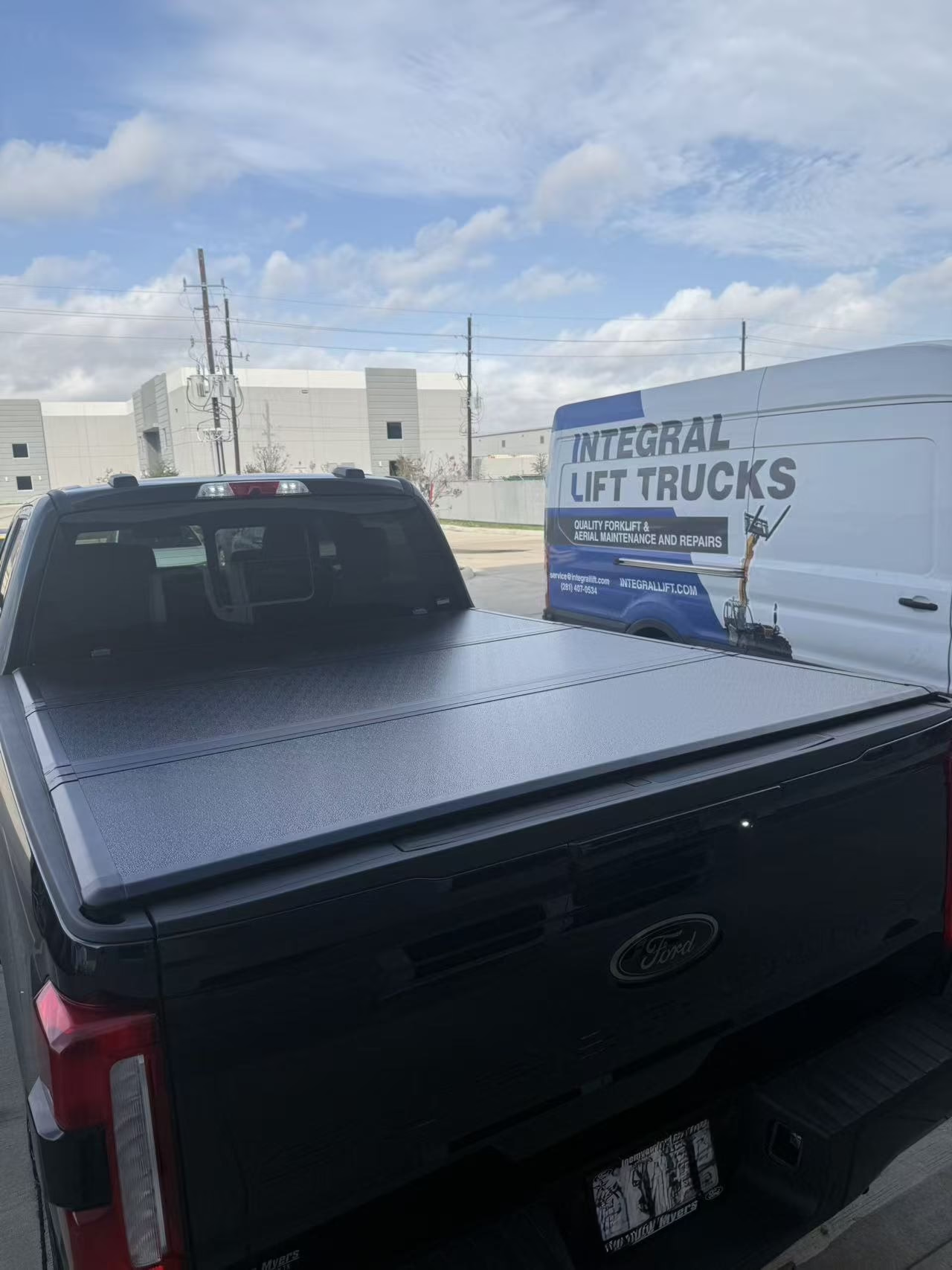
You can drive with some hard tri-fold tonneau covers open, but only in a position the manufacturer approves for travel and with every required restraint secured. An open position used to reach cargo while parked is not automatically suitable for driving.
Before leaving the driveway, identify your exact cover and check its operating instructions. The permitted panel position, securing hardware, and restrictions can differ between models that look similar.
Table of Contents
- Start With the Approved Travel Position
- Can You Drive with Just One Panel Open?
- Use Every Required Restraint
- Secure Cargo Separately
- What to Check Before Driving
- When Should You Remove the Cover Instead?
- Frequently Asked Questions
Start With the Approved Travel Position
“Open” can describe several different arrangements: a rear panel lifted for loading, panels folded into a horizontal stack, or a cover supported upright near the cab. These positions are not interchangeable.
For some hard tri-fold designs, the approved open travel position is a fully folded horizontal stack secured near the front of the bed. Other hard folding models offer an upright position with specified supporting hardware. Check the instructions for the exact product rather than copying the setup on another truck.
Do not lift a horizontal-stack design against the cab unless the manufacturer explicitly provides for that position. Likewise, do not assume that a support used while parked is intended to withstand travel.
If you are comparing cover designs, our guide to hard tri-fold tonneau cover bed access explains how folded panels affect the opening and when removal may be necessary.
Can You Drive with Just One Panel Open?
Do not assume you can. A panel may stay in place long enough to load a bag or reach a tool without being secured for the forces encountered while driving.
Some covers permit travel only when fully closed or completely folded and restrained in their designated open position. If your manual does not approve the partly open arrangement you intend to use, choose an approved position or remove the cover according to its instructions.
A short trip does not change this requirement. Neither the weight of the panels nor an apparently snug fit replaces the specified restraint system.
Use Every Required Restraint
Depending on the model, securing the open cover may involve straps, buckles, storage clips, support rods, or other components. Follow the correct attachment points, sequence, and adjustment procedure in the operating guide.
If the instructions require restraints on both sides, secure both. Do not leave one disconnected because the load blocks access or because the other side appears sufficient.
Inspect the required components for damage and confirm they engage correctly. A missing buckle, damaged strap, or loose attachment needs to be addressed before using that travel position.
Do not substitute bungee cords, cargo straps, or improvised supports for the cover’s specified hardware without explicit manufacturer approval. If the correct parts are missing, contact the manufacturer for the appropriate replacement and instructions.
Secure Cargo Separately
The hardware that holds the cover open secures the cover, not the load. Use appropriate cargo restraints and suitable truck tie-down points independently of the tonneau cover.
Check that equipment cannot shift into the panel stack, hinges, latches, or restraints. Leave the clearance required for the cover to remain in its approved position throughout the trip.
For tall or bulky cargo, assess the loading path as well as the final position. An item may fit on the bed floor but interfere with the folded panels or their securing hardware. Do not wedge cargo against the cover to keep either one in place.
If you regularly carry equipment for work, our guide to tonneau covers for work trucks discusses planning around cargo height and daily access.
What to Check Before Driving
Use the manufacturer’s operating checklist for your model. Before moving the truck, confirm:
- Position: The panels are arranged in a position explicitly approved for travel.
- Restraints: Every required strap, buckle, clip, or support is correctly attached and adjusted.
- Mounting: The cover has no known loose, damaged, or missing mounting components.
- Clearance: Cargo and accessories do not interfere with the panels or securing hardware.
- Cargo: The load is independently restrained.
- Visibility: Assess the effect of the arrangement on your view and check that required lights remain unobstructed.
Follow any model-specific speed or operating restrictions. There is no single speed limit that makes every open-cover arrangement acceptable, and driving more slowly does not make an unapproved position suitable.
If the cover begins moving unexpectedly or you notice a securing problem, pull over where it is safe to do so and resolve the issue before continuing.
If the cover is new to you, have the installer demonstrate its approved positions. Our tonneau cover installation checklist includes questions to ask at handover.
When Should You Remove the Cover Instead?
Consider removal when the load cannot fit without blocking the approved folded position or its restraints. Removal may also be needed when a horizontal panel stack prevents the access your loading method requires.
Follow the manufacturer’s removal and handling procedure, including any need for another person to help. Store the removed cover as directed and confirm which mounting parts remain on the truck.
Removal does not eliminate cargo-restraint or clearance requirements. Plan the load independently, then follow the installation checks when the cover is refitted.
If you are choosing a hard tri-fold cover for your truck in Katy, Texas, contact Prime Truck Covers. Share your truck details and typical cargo to ask about compatible options, approved operating arrangements, availability, and an installation quote.
Frequently Asked Questions
Can I drive on the highway with a hard tri-fold tonneau cover open?
Only if the manufacturer permits that use with the cover in its specified travel position and every required restraint engaged. Follow any speed or operating restrictions for the exact model.
Is one strap enough to secure a folded cover?
Not if the instructions require more than one. Use all specified restraints in the approved locations. If a required component is missing or damaged, do not use that open travel configuration.
Can cargo hold the folded panels in place?
No. Secure the cover with its specified hardware and restrain cargo separately. Equipment should not press against the panels or interfere with their restraints.
What if I cannot find the operating instructions?
Locate the brand, model, and part number on the cover or purchase records and request the correct guide from the manufacturer or installer. Confirm the approved positions before driving with it open.