

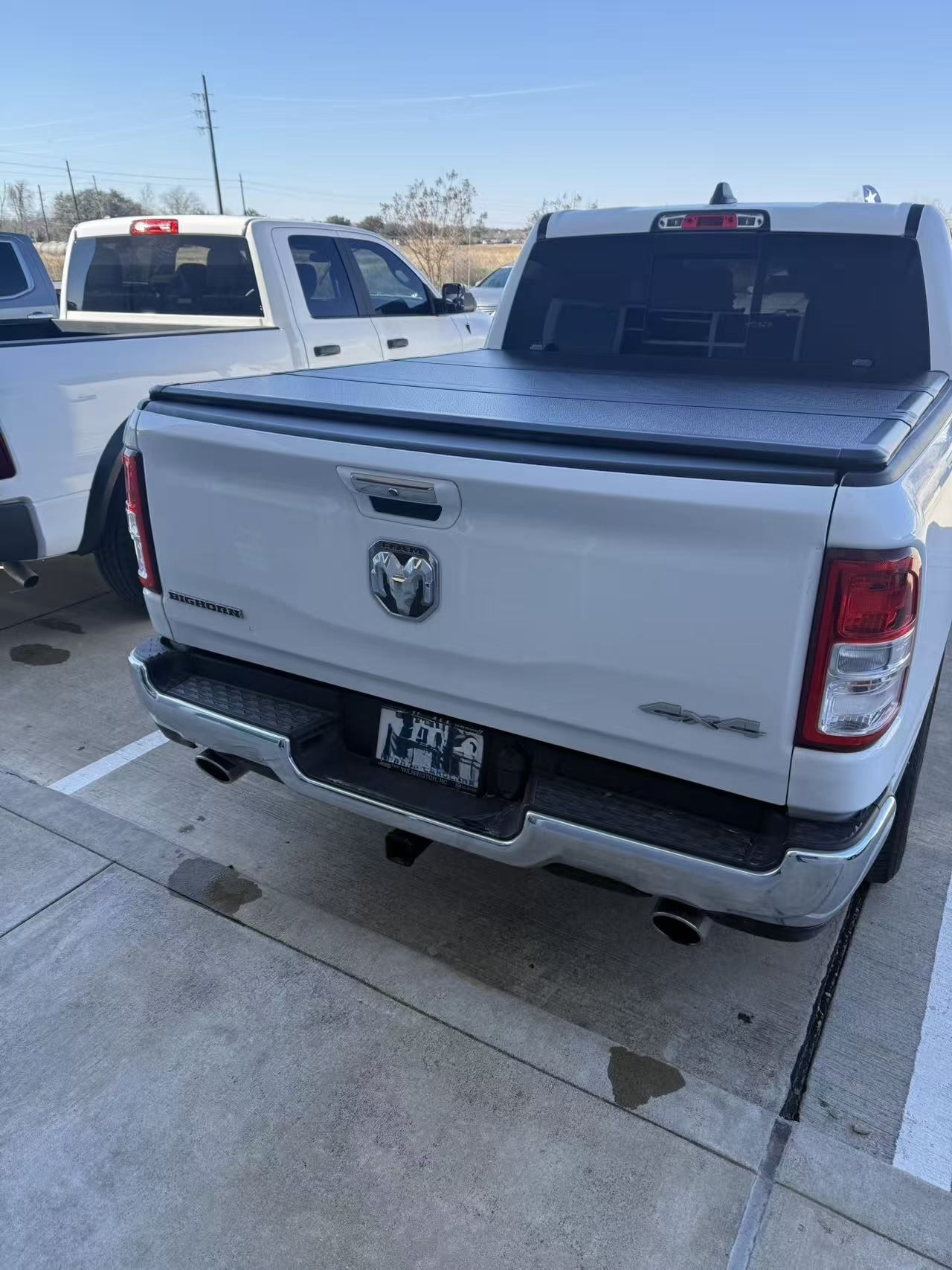
You may be able to take a truck with a tonneau cover through a car wash, but approval depends on the exact cover and wash method. A hard tri-fold design does not automatically make every automatic wash suitable.
Check the manufacturer’s care instructions before choosing a wash. Confirm the permitted cleaning methods, required cover position, and restrictions on chemicals or surface treatments. If the guidance is unclear, ask the manufacturer before entering an automatic wash.
Table of Contents
- Start With Your Cover’s Instructions
- Compare Brush, Touchless, and Hand Washing
- What to Check Before Entering a Wash
- Should the Cover Be Open or Closed?
- Inspect the Cover After Washing
- Frequently Asked Questions
Start With Your Cover’s Instructions
Identify the cover by its brand, model, and part number. Instructions for another hard folding cover may not apply to yours, even when the panels look similar.
Look for cleaning guidance in the owner’s manual and check any restrictions for the panel finish, seals, and operating hardware. Keep the guide available so you can confirm the requirements when choosing a different wash service.
For routine care beyond the wash itself, see our guide to cleaning and maintaining a hard tri-fold tonneau cover.
Compare Brush, Touchless, and Hand Washing
These methods expose the cover to different conditions. Use the comparison to identify questions for the manufacturer and wash operator, rather than treating a wash category as blanket approval.
Automatic Washes with Brushes or Rollers
Brushes and rollers make physical contact with the truck and its accessories. That contact can affect the cover’s finish or catch on edges. Do not assume that a service described as “soft-touch” is approved for your cover.
Touchless Automatic Washes
A touchless wash avoids brush contact, but water pressure and cleaning chemicals still matter. Confirm that the process and selected treatments meet the cover’s care requirements. “Touchless” does not mean suitable for every finish, seal, or installation.
Hand Washing and Self-Service Bays
Hand washing gives you more control over the products and how they are applied. Follow the model’s approved method and use suitable clean washing materials.
A self-service bay still requires care: a pressure wand is not equivalent to a gentle hose rinse. Check the manufacturer’s guidance before using it, particularly around joints and sealing edges. Do not invent a pressure or distance setting based on another cover’s instructions.
What to Check Before Entering a Wash
Once you have confirmed the wash method is permitted, review the truck and cover before joining the queue:
- Cover condition: Address known damage, loose mounting parts, or faulty latches first.
- Wash program: Check which soaps, waxes, protectants, or other treatments the package includes.
- Accessory acceptance: Tell the operator about racks, toolboxes, and other equipment that may affect clearance or eligibility.
- Bed contents: Remove or suitably protect moisture-sensitive items. A closed cover is not a guarantee that the bed will remain dry.
- Operating instructions: Follow the truck’s car-wash procedure as well as the cover’s requirements.
If the operator cannot identify the treatments or accommodate the setup, choose a method you can confirm is appropriate. A cover’s material alone does not answer those questions.
For a newly installed cover, our tonneau cover installation checklist explains what to review at handover.
Should the Cover Be Open or Closed?
Follow the model’s wash instructions. Do not enter an automatic wash with a panel raised or the cover partly folded as a way to keep water off its surface. Where automatic washing is permitted, manufacturers may require complete closure and latch engagement.
An open position approved for driving is not automatically approved for washing. Ask separately about wash operation rather than applying the travel instructions to a different situation.
Do not assume removal is necessary for every cover either. If the manufacturer recommends removing it for the intended wash, use the specified handling and storage procedure, then complete the required checks when reinstalling it.
Inspect the Cover After Washing
Once parked safely, check the panels, visible seals, and normal latch operation. Note any new scuffs, displaced edges, unusual resistance, or other change from the cover’s previous condition.
If water entered the bed, record where you found it and which wash program was used. Do not immediately add sealant or move hardware to chase the leak. Our guide to what to check when a tonneau cover leaks provides a starting point.
If the cover no longer secures correctly, resolve the problem before driving. Share photos and model information with the manufacturer or installer so they can assess the issue.
For hard tri-fold cover options and professional installation in Katy, Texas, contact Prime Truck Covers. Share your truck details to ask about compatible options, availability, and an installation quote.
Frequently Asked Questions
Is a touchless car wash suitable for every tonneau cover?
No. It avoids brush contact, but you still need to confirm that the pressure, chemicals, and selected treatments are appropriate for the exact cover.
Can I select spray wax with a hard tri-fold cover?
Only if the cover manufacturer approves the treatment for its materials and finish. Do not assume that a wax suitable for truck paint is also suitable for the panels and seals.
Does water inside the bed prove the cover was installed incorrectly?
Not by itself. Record the entry location and wash conditions and have the cause assessed. Avoid assuming that a tonneau cover creates a completely waterproof compartment.
Do I need to remove my cover before every wash?
Not necessarily. Check the model’s care instructions and intended wash method. If the combination is not approved, choose an appropriate alternative or follow the specified removal procedure.